
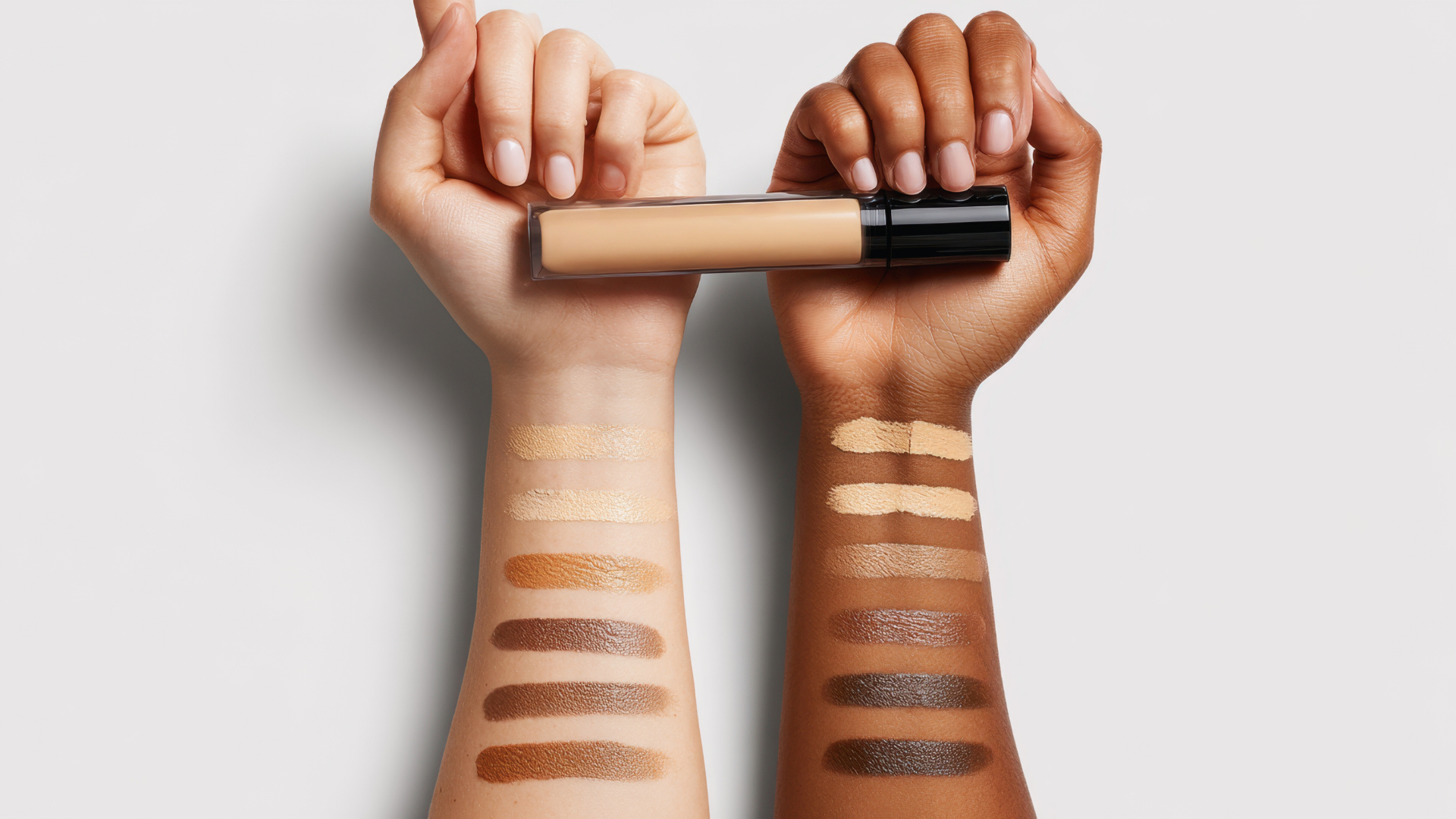
Choosing the right foundation starts with understanding skin type—this ensures the product complements rather than conflicts with natural skin conditions. The best foundation for oily skin is oil-free and mattifying, while dry skin benefits from hydrating and luminous formulas.
Knowing your skin type helps avoid issues like cakey makeup or excess shine. This knowledge guides the selection of texture, coverage, and finish that work best for lasting comfort and a natural appearance.
Identifying Your Skin Type for Foundation Selection
Knowing the skin type helps choose a foundation that enhances complexion and addresses specific needs. Factors like oiliness, dryness, sensitivity, and signs of aging dictate the type of product best suited for wearers.
How to Determine Your Skin Type
He or she can start by cleansing the face and waiting one hour without applying any products. If the skin feels tight and shows flakes, it indicates dry skin.
If the skin appears shiny or greasy, especially in the T-zone, it suggests oily skin. Combination skin displays oiliness on the forehead and nose but dryness on the cheeks.
For normal skin, the face feels balanced, neither dry nor oily, and shows minimal irritation. Sensitive skin tends to react with redness or stinging after product application or environmental exposure.
Addressing Common Skin Concerns
When acne-prone, foundation choice should avoid pore-clogging, favoring non-comedogenic, lightweight formulas to limit breakouts.
Dry cheeks require hydration, so foundations with moisturizing ingredients work best. Those with fine lines and wrinkles benefit from formulations with a satin or dewy finish to reduce the appearance of aging.
Redness or sensitive skin benefits from foundations with calming ingredients and minimal fragrances to prevent irritation and even out skin tone.
Adapting to Changes in Skin Type Over Time
Skin type often changes due to age, hormones, diet, and environment. Mature skin may become drier and show more wrinkles, necessitating richer, hydrating foundations.
In contrast, oily skin might balance out with age or shift to combination skin. It is important to reassess skin condition periodically and adjust foundation formulas accordingly.
Seasonal changes also affect skin, requiring lighter products in summer and more nourishing formulas in colder months.
Matching Foundation Formulas and Finishes to Your Skin Needs
Different skin types require specific foundation formulas and finishes to achieve the best look and comfort throughout the day. Consider hydration level, desired coverage, and the presence of key ingredients that support skin health when choosing a foundation.
Choosing the Right Foundation Formula
Foundation formulas vary widely, including liquid, powder, cream, and cushion options. Liquid foundations are versatile and often come with hydrating ingredients like hyaluronic acid and glycerin, making them ideal for dry or normal skin types.
Powder foundations typically offer oil absorption and a matte finish, suitable for oily skin. However, they can emphasize dryness if used on dry skin.
Cream foundations provide rich, moisturizing coverage, good for aging or dry skin, but might be too heavy for oily skin.
Cushion foundations blend hydration with light to medium coverage, ideal for a natural, dewy look.
Selecting the Ideal Coverage and Finish
Coverage varies from buildable medium to full coverage, depending on skin needs and desired look. For oily skin, a matte foundation can control shine. Dry skin benefits from a dewy or radiant finish, which adds a healthy glow and counteracts dryness.
Medium coverage is suitable for everyday wear and offers balance without heaviness. Full coverage works best for those needing to conceal blemishes or uneven skin tone, but may feel heavier on sensitive or dry skin.
Choosing the right finish helps enhance skin’s appearance while maintaining comfort.
Key Ingredients and Their Benefits
Hydrating ingredients such as hyaluronic acid and glycerin attract and retain moisture, preventing dryness under foundation. Peptides support skin elasticity and repair, making them valuable in foundation formulas aimed at mature skin.
Foundations without heavy oils or comedogenic ingredients reduce breakouts, important for oily or acne-prone skin.
Look for foundations labeled with beneficial ingredients to improve skin health while providing base makeup coverage. This approach supports both appearance and skin condition over time.
Finding the Perfect Shade and Undertone
Selecting the right foundation shade involves recognizing undertones and mastering shade-matching techniques. Seasonal changes also affect skin complexion, requiring adaptive adjustments to maintain a natural look and enhance confidence.
Understanding Skin Undertones
Skin undertones fall into three categories: cool, warm, and neutral. Cool undertones have pink, red, or blue hues. Warm undertones display yellow, golden, or peach hues. Neutral undertones combine elements of both, making them easier to match.
Identifying undertones can be done by checking the veins on the wrist: blue or purple veins indicate cool undertones, while greenish veins signal warm undertones. Neutral undertones will show a mix of difficulty in defining.
Knowing undertones helps in selecting a foundation shade that complements natural beauty and prevents mismatched or ashy appearances.
Techniques for Shade Matching
Shade matching works best in natural light to avoid misleading colors. Testing foundation along the jawline ensures a seamless blend between face and neck. If the shade disappears into the skin without leaving a trace, it’s a good match.
Using foundation testers or samples allows comparison of multiple shades. Many brands offer shade guides or apps to assist in color matching using photos or descriptions.
Correct shade matching boosts confidence by enhancing a natural look and avoiding noticeable lines or mismatched tones.
Adapting Shade Choice to Seasonal Changes
Skin tone can change with seasons due to sun exposure or dryness. In summer, skin often darkens slightly, necessitating a deeper foundation shade. Winter usually calls for a lighter or more neutral tone.
People with warm undertones might notice their complexion becomes warmer in sunlit months, while cool undertones may experience a subtle shift toward neutral.
Reevaluating foundation shade every few months helps maintain color matching accuracy and preserves the natural appearance of the skin throughout the year.
Foundation Application, Skin Preparation, and Makeup Longevity
Effective makeup starts with proper skin prep, smooth product application, and techniques to extend wear. Attention to these details minimizes issues like breakouts or irritation and highlights a radiant complexion with a flawless finish.
Priming and Prepping the Skin
Proper skin preparation is essential to prevent irritation and provide a smooth base for foundation. It begins with cleansing to remove dirt and oil, followed by moisturizing suited to the skin type to maintain hydration without heaviness.
A quality primer enhances foundation adhesion and longevity. For oily skin, mattifying primers control shine and reduce pore size. Dry skin benefits from hydrating primers that smooth flakes and add radiance. Applying primer evenly ensures a consistent texture for the foundation.
Lay products on skin free of blemishes or active breakouts whenever possible to prevent trapped bacteria. If needed, gentle spot treatment used beforehand can reduce irritation in sensitive areas.
Effective Application Methods
The choice of application method affects coverage, finish, and how the foundation interacts with the skin. Using a damp makeup sponge helps blend foundation seamlessly and build coverage gradually without caking.
Brushes deliver more coverage and precision around blemishes or uneven areas. Using stippling or buffing motions avoids streaks and achieves a flawless finish. Fingers warm the foundation, assisting in even blending and a natural finish, but hygiene must be maintained to avoid breakouts.
Applying foundation in thin layers allows better control and minimizes product buildup. Concentrate application on areas needing extra coverage, such as redness or discoloration, and use concealer as a targeted correction tool.
Setting and Enhancing Your Base
Setting foundation locks it in place and controls shine, extending makeup longevity. For oily or combination skin, use a translucent setting powder focused on the T-zone to absorb excess oil without dulling the complexion.
Dry skin types should use minimal powder to avoid dryness, preferring a lightweight, finely milled option or skipping powder altogether for a natural glow. Setting spray finishes the routine by sealing makeup, reducing powdery appearance, and improving wear.
Regular touch-ups with blotting papers or light powder application maintain a fresh look throughout the day. These finishing steps ensure the foundation stays intact, blemishes remain concealed, and the complexion appears smooth and radiant.
Leave a Reply